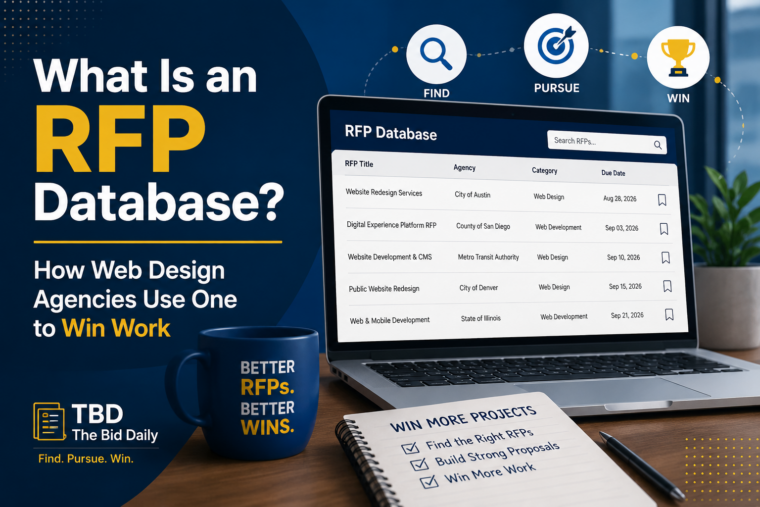
If you run or work at a web design agency, you have probably heard the term in sales and marketing circles: an RFP database. But what is an RFP database, really, and why do so many agencies say it changed the way they find new work? In short, it is a searchable collection of Requests for Proposal, the formal documents organizations publish when they want to hire a vendor, gathered in one place so you do not have to hunt for them across dozens of separate websites.
For agencies that design and build websites, an RFP database can be the difference between chasing scraps and having a steady stream of qualified projects to bid on. Let’s break down what it is, how it works, and how to actually use one to win more contracts.
What Is an RFP Database, exactly?
A Request for Proposal, or RFP, is a document an organization that can be a city government, a school district, a nonprofit, or a private company, publishes when it needs to buy a service and wants competing vendors to submit bids. A website redesign, a new web application, an accessibility overhaul: these all commonly go out as RFPs, especially in the public sector where competitive bidding is often required by law.
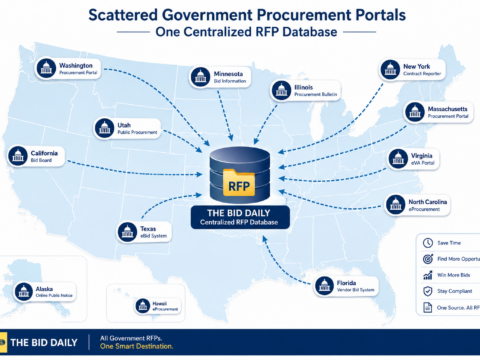
The problem is that these documents are scattered. A single state might post its opportunities on one portal, individual cities on their own sites, school districts somewhere else, and nonprofits through email lists or their own pages. A request for proposal that is perfect for your agency might be sitting on a county procurement page you have never visited.
An RFP database solves that fragmentation. It aggregates solicitations from thousands of sources into one searchable platform, so instead of checking fifty portals every morning, you check one. A good technology RFP database goes a step further and filters specifically for the categories that matter to a web agency including web design, development, digital services, and related tech work, so you are not wading through road-paving and cafeteria-supply contracts to find the handful that fit.
Why Web Design Agencies Struggle to Find RFPs
Most agencies find new business through referrals, cold outreach, or paid leads. Those channels work, but they are unpredictable and often expensive. RFPs are appealing because they represent buyers who have already decided to spend money and are actively looking for a vendor, the intent is baked in.
The catch is discovery. Government and institutional buyers rarely advertise; they post to procurement portals that are clunky, inconsistent, and easy to miss. Deadlines are tight, and if you find an RFP three days before it closes, you have almost no chance of putting together a competitive response. Many small agencies simply give up on public-sector work because the sourcing feels impossible.
- Too many sources: opportunities live on hundreds of separate federal, state, local, and institutional sites.
- No filtering: most portals mix every industry together, so tech work is buried.
- Missed deadlines: without alerts, you find relevant RFPs after they have closed.
- Time cost: manually checking portals can eat an hour or more every day.
How an RFP Database Changes the Game
This is where a dedicated database earns its keep. Instead of you going out to find opportunities, the opportunities come to you, organized, filtered, and searchable. A purpose-built RFP database for the technology industry pulls solicitations from across all fifty states and sorts them into the categories agencies actually bid on, turning what used to be an hour of portal-checking into a two-minute morning scan.
The practical benefits stack up quickly. You can search by keyword, location, or budget to find the projects that fit your team. You can set up alerts so a new website redesign RFP lands in your inbox the day it is posted, not the week it closes. And because everything is in one feed, you can compare opportunities side by side and make faster, smarter bid decisions.
What to Look for in an RFP Database
Not every bid database is built the same way, and the generic ones aimed at every industry can be almost as noisy as the portals they replace. When you evaluate a platform, look for a few things that matter specifically to web and tech vendors:
- Technology focus: categories built around web design, development, software, and digital services, not buried under construction and office supplies.
- Broad coverage: solicitations from federal, state, local, education, and nonprofit sources, ideally across all fifty states.
- Timely alerts: notifications so you catch opportunities early enough to respond well.
- Search and filters: the ability to narrow by keyword, geography, and budget so you only see fitting work.
- Fair pricing: a free tier to start and an affordable paid tier for deeper access, so the tool pays for itself on a single won project.
Turning RFP Listings into Won Projects
Finding the right RFP is only the first step; winning it is where the work begins. But having a reliable pipeline of relevant opportunities lets you be selective, you can pass on poor-fit projects and put real effort into the ones you can win. Over time, agencies that consistently bid on well-matched RFPs build a track record of public-sector work, which makes each subsequent proposal stronger.
So, to return to the question we started with, what is an RFP database? It is the tool that turns the chaotic, scattered world of public and institutional bidding into a single, manageable feed, and gives a web design agency a repeatable way to find the projects worth pursuing. For teams that have relied on referrals and luck, it is often the missing piece that makes new business predictable.
If you have been meaning to explore government, education, and nonprofit web projects but did not know where to start, a technology-focused RFP database is the simplest place to begin. Browse what is out there, set an alert or two, and see how many fitting opportunities are already waiting.